GEOTECHNICALENGINEERING1
FRESNO
HomeLaboratoryLaboratory CBR test

Laboratory CBR Testing for Pavement Design in Fresno

Sound ground. Sound decisions.

LEARN MORE

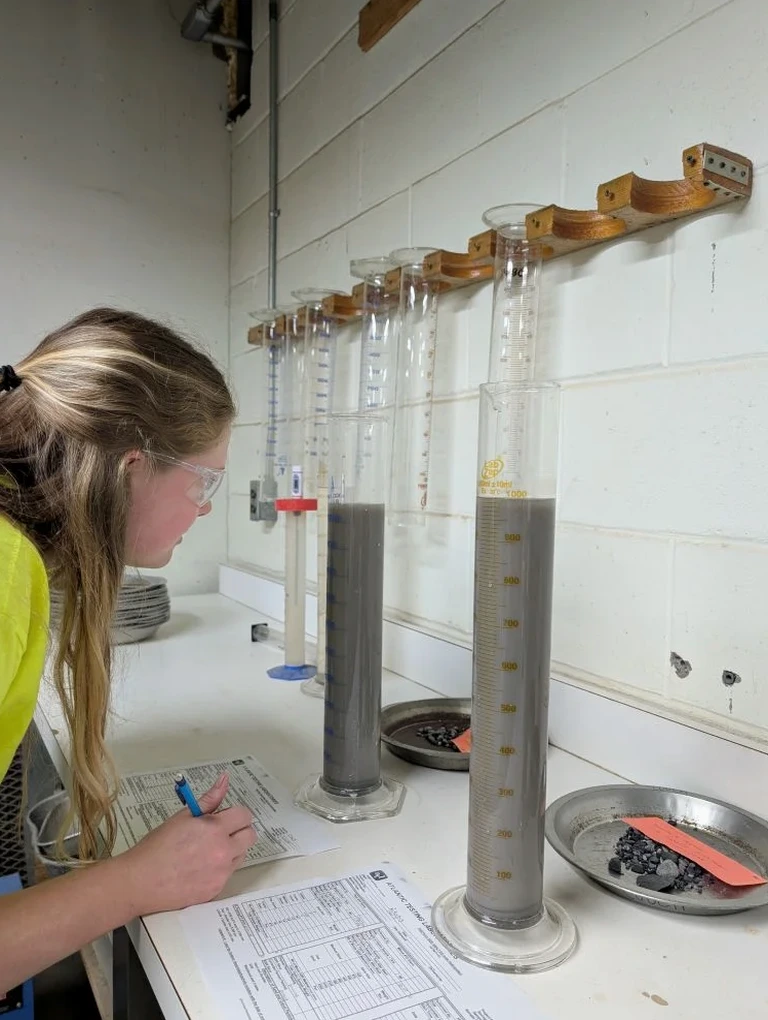
The alluvial fans descending from the Sierra Nevada define Fresno's subsurface: silty sands, sandy silts, and the occasional hardpan layer that surprises contractors every season. With a shallow groundwater table barely 15 to 30 feet below downtown and summer temperatures that routinely exceed 100°F, moisture swings in the subgrade are not a textbook scenario here — they are the daily reality. A standard soaked CBR test run in a Fresno laboratory captures exactly this behavior, revealing how much strength the formation loses when it saturates after a wet winter. We complement that soaked value with unsoaked runs to bracket the range, and when the project sits on older terrace deposits we often pair the CBR with a grain-size distribution curve to confirm fines content before locking in the pavement structural number.

A soaked CBR value under 3% on a silty subgrade means the pavement section must either be thickened or the subgrade replaced — there is no middle ground in Fresno's shrink-swell regime.
Our service areas

Process and scope

ASTM D1883 sets the baseline, but the California Test 301 method for Hveem-stable R-value correlation still governs many Caltrans-affiliated jobs across Fresno County. That dual requirement means a single CBR number without the right compaction energy and moisture history is useless for a design engineer. We run three-point compaction curves per ASTM D698 or D1557 so the CBR specimen is molded at the target density and water content specified in the project geotechnical report. For Fresno's silty-sandy matrix — think the Turlock Lake and Hanford formations — the critical window is the 48-hour swell measurement under a 10-pound surcharge: we have tracked swell percentages from 0.8% on well-graded decomposed granite to over 4% on plastic silts near the San Joaquin River. That swell directly feeds the pavement drainage coefficients, and ignoring it has produced cracked arterials within three years. For deeper formation evaluation, the CPT test gives us continuous tip resistance and sleeve friction profiles that help decide where the CBR sampling intervals need to be tighter.
Laboratory CBR Testing for Pavement Design in Fresno
Technical reference — Fresno

Local considerations

More than once we have seen a contractor compact a silty sand to 95 percent relative compaction, pass the field density test, and still end up with a soaked CBR below the design value because the lab specimen was molded at optimum moisture while the field crew compacted two percent dry of optimum. That two-percent gap on a moisture-sensitive formation common in eastern Fresno can drop the CBR by a factor of two. The risk compounds when the pavement structural design assumes a CBR of 10 percent and the as-built subgrade delivers 4 percent: the resulting tensile strain at the bottom of the asphalt layer cuts the fatigue life by more than half according to AASHTO 93 mechanistic-empirical models. A conservative approach — running soaked CBR specimens at both optimum and optimum-plus-two-percent moisture — costs a few hundred dollars extra in lab fees and saves a six-figure premature rehabilitation bill down the road.

Need a geotechnical assessment?

Reply within 24h.

Email: contact@geotechnicalengineering1.com

Video overview

Relevant standards

ASTM D1883-21: Standard Test Method for California Bearing Ratio (CBR) of Laboratory-Compacted Soils, ASTM D698-12(2021): Standard Test Methods for Laboratory Compaction Characteristics of Soil Using Standard Effort, Caltrans CT 301: Method for Determining the R-Value of Treated and Untreated Bases, Subbases, and Subgrade Soils by the Stabilometer, AASHTO T 193-22: The California Bearing Ratio

Technical parameters

ParameterTypical value
Standard methodASTM D1883-21, Caltrans CT 301 (R-value correlation available)
Specimen compactionASTM D698 (Standard Proctor) or ASTM D1557 (Modified Proctor) per project spec
Soaking condition96-hour soak with swell measurement at 0, 24, 48, 72, 96 hours under 10-lb surcharge
Penetration piston rate0.05 in/min (1.27 mm/min) constant strain
Typical materials testedSubgrade silty sands, aggregate base (AB Class 2), cement-treated base, recycled concrete
Swell measurement resolution0.001-inch dial indicator, three-point average
Data reportingCBR at 0.1-inch and 0.2-inch penetration, stress-penetration curve, swell vs. time plot
Lab accreditationISO/IEC 17025:2017 through A2LA, Caltrans Independent Assurance qualified

Frequently asked questions

How much does a laboratory CBR test cost in Fresno?
What is the difference between a field CBR and a laboratory CBR?

A field CBR test uses a plunger pushed directly into the compacted subgrade at the jobsite without controlling moisture or density history; it gives a point-in-time number that reflects the in-situ condition at that moment. A laboratory CBR test compacts the soil to a specified density and water content, then soaks it for 96 hours to simulate the worst-case saturated condition that the pavement will experience over its design life. For Fresno's silty formations, the soaked lab value is almost always lower — and it is the number that should govern the pavement structural design per AASHTO 93.

How many CBR specimens do I need for a residential street project in Fresno?

A typical residential street extending 800 to 1,200 linear feet across uniform alluvial soils warrants one three-point CBR series per distinct soil unit encountered. If the borings show two different formations — say a sandy silt over a clayey silt — budget for two series. The City of Fresno Public Works standard specifications often require a minimum CBR of 5 percent on the subgrade and 20 percent on the aggregate base; we recommend verifying both with soaked specimens before the first asphalt lift goes down.

Location and service area

We serve projects across Fresno and surrounding areas.

View larger map