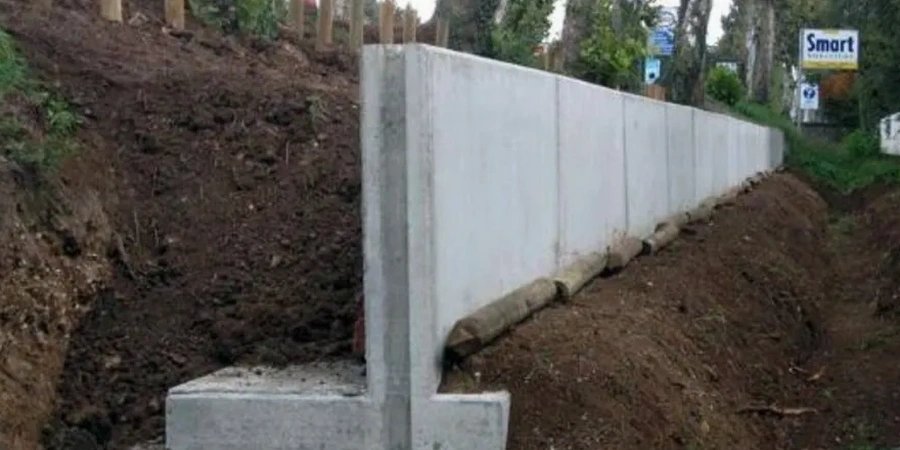
In Fresno's dynamic terrain, where the Sierra Nevada foothills meet the expansive Central Valley, the stability of slopes and the integrity of retaining structures are not just engineering concerns — they are essential safeguards for property, infrastructure, and public safety. The category of Slopes & Walls encompasses the specialized geotechnical disciplines required to analyze, design, and mitigate risks associated with natural and man-made earth retention systems. From preventing landslides along Highway 168 to enabling residential development on hillside lots, these services address the unique challenges posed by gravity, water, and soil mechanics. A thorough slope stability analysis forms the foundation of any project, evaluating the potential for mass movement and identifying the factors of safety necessary to protect lives and investments. Without this critical assessment, even modest grading operations can trigger costly and dangerous failures.
Fresno's geology presents a complex tapestry that directly influences slope and wall performance. The region is underlain by a mix of alluvial fan deposits from the Kings and San Joaquin Rivers, interspersed with older sedimentary formations of the Great Valley Sequence and, closer to the mountains, decomposed granite and metamorphic rock. These materials often exhibit low shear strength when saturated, expansive clay lenses that swell with moisture, and abrupt stratigraphic boundaries that create planes of weakness. The local climate exacerbates these conditions: intense winter rainstorms following prolonged dry periods can rapidly increase pore-water pressure behind retaining walls and within slopes, triggering shallow slumps and debris flows. Furthermore, the presence of hardpan layers can impede drainage, creating perched water tables that demand careful hydrogeological consideration in every retaining wall design.
Regulatory compliance in Fresno is governed by a framework of national and state standards that dictate the minimum requirements for slope and wall engineering. The California Building Code (CBC), which adopts and amends the International Building Code (IBC), provides prescriptive guidelines for earth retaining structures, including allowable stress design and load combinations specific to seismic conditions. Given Fresno's proximity to active faults, including the San Andreas system, seismic design parameters from ASCE 7 and the California Geological Survey's Seismic Hazard Maps are mandatory inputs for any retaining wall over a certain height or supporting critical facilities. Local municipal codes, enforced by the City of Fresno Public Works Department, often require geotechnical reports that demonstrate compliance with these standards, including minimum factors of safety for global stability (typically 1.5 for static and 1.1 for seismic conditions) and specific drainage provisions to prevent hydrostatic buildup.
The types of projects requiring these services are remarkably diverse across the Fresno metropolitan area. Residential developments in the Bluffs or along the San Joaquin River bluffs frequently demand engineered retaining walls to create buildable pads while preserving natural drainage patterns. Commercial infrastructure, such as distribution centers in the city's industrial corridors, relies on tiered mechanically stabilized earth (MSE) walls to maximize usable acreage. Transportation projects, including Caltrans highway widenings and bridge abutments, depend on rigorous slope stability analysis to prevent roadway closures from landslides. Agricultural water conveyance canals in the surrounding farmland require durable retaining wall design to resist both soil loads and rapid drawdown conditions. Each project type demands a tailored approach that integrates site-specific geology with the intended service life and consequence of failure.
Common indicators of potential slope instability include tilting trees or utility poles, new cracks in the ground surface or pavement, sudden appearance of springs or wet spots, bulging at the base of a slope, and separation of structures from foundations. In Fresno's expansive clay soils, you may also observe significant cracking after heavy rains or prolonged irrigation, which can signal developing failure planes that require professional evaluation.
Fresno's location in a seismically active region mandates that retaining walls be designed for lateral earth pressures increased by earthquake loading. The California Building Code requires dynamic analysis using peak ground acceleration values from USGS hazard maps, typically resulting in additional reinforcement, deeper foundations, or modified wall geometry compared to static-only designs. Walls supporting critical structures or exceeding height thresholds face more stringent review.
A properly designed and constructed retaining wall in Fresno can last 50 to 75 years or more, depending on material selection and drainage maintenance. The region's hot, dry summers and cool, wet winters create freeze-thaw cycles that can degrade poorly compacted backfill or inadequate waterproofing. Regular inspection of weep holes and surface drainage systems is essential to prevent premature failure from hydrostatic pressure buildup.
Yes, the City of Fresno generally requires a building permit for retaining walls exceeding 3 feet in height measured from the bottom of the footing to the top of the wall, or for any wall supporting a surcharge such as a driveway or structure. The permit process requires submission of structural calculations and a geotechnical report sealed by a licensed engineer, demonstrating compliance with CBC standards and local grading ordinances.