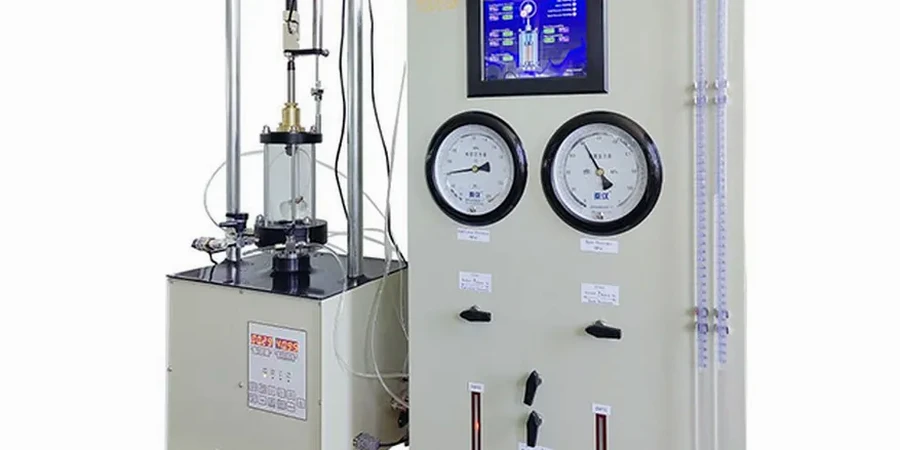
Geotechnical laboratory testing forms the backbone of subsurface investigation and foundation design across Fresno and the greater Central Valley. This category encompasses a comprehensive suite of physical and mechanical analyses performed on soil, rock, and groundwater samples recovered from boreholes, test pits, and monitoring wells. From basic index properties to advanced strength and consolidation testing, the laboratory provides the quantitative data engineers need to characterize site conditions, predict settlement, assess slope stability, and design safe, economical earthworks and structural foundations. In a region where alluvial soils, expansive clays, and seismic hazards converge, rigorous laboratory work is not optional—it is essential for managing risk and complying with local building standards.
Fresno’s geology is dominated by Quaternary alluvial deposits shed from the Sierra Nevada batholith to the east and the Coast Ranges to the west. These sediments—ranging from gravelly channel fills to thick sequences of silts and high-plasticity clays—exhibit significant spatial variability across the metropolitan area. The San Joaquin Valley portion underlying Fresno also contains zones of compressible, organic-rich clays and shallow groundwater that complicate excavation, dewatering, and long-term settlement performance. Laboratory testing programs must be tailored to this depositional complexity, often combining grain size analysis (sieve + hydrometer) with Atterberg limits, moisture content, and unit weight determinations to build a reliable geotechnical model. Without this data, assumptions about bearing capacity or drainage behavior remain speculative at best.
Laboratory testing in the United States is governed by consensus standards published by ASTM International, with additional oversight from Caltrans and local agencies for public works projects. ASTM D422 and D6913 define procedures for particle-size distribution, while ASTM D4318 covers liquid and plastic limits. Consolidation testing follows ASTM D2435, and direct shear or triaxial compression tests adhere to D3080 and D4767, respectively. In California, the Department of Health Care Access and Information (HCAI) enforces modified protocols for hospital and essential service facilities under the OSHPD seismic compliance program. The City of Fresno Building and Safety Division typically requires laboratory results stamped by a California-registered Geotechnical Engineer (GE) and accredited through AASHTO re:source or the U.S. Army Corps of Engineers validation program, ensuring data defensibility for permit approval.
The range of project types demanding laboratory support in Fresno is broad. Residential subdivisions on the city’s expanding northern and southeastern fringes require expansive soil characterization to meet CBC Section 1803 foundation requirements, often relying on grain size analysis (sieve + hydrometer) paired with plasticity index testing to classify clays. Commercial developments, including tilt-up warehouses and retail centers, need consolidation and shear strength data for slab-on-grade and shallow footing design. Infrastructure projects—bridge replacements, canal linings, and highway widenings—depend on laboratory compaction curves (ASTM D1557) and R-value testing for pavement sections. Even agricultural facilities, such as packing plants and cold storage buildings, must address liquefaction potential and settlement in the shallow groundwater environment typical of the Fresno area, making dynamic laboratory testing increasingly common.
A standard investigation in the Fresno area commonly includes moisture content, dry density, Atterberg limits, and grain size distribution (sieve plus hydrometer) to classify soils per ASTM D2487. Depending on the project, consolidation tests, direct shear or triaxial compression tests, expansion index, and R-value testing for pavement design may also be necessary to address settlement, bearing capacity, and seismic concerns.
Fresno's alluvial soils often contain expansive clays, compressible silts, and zones of high groundwater. This demands focused testing on plasticity, potential volume change, and consolidation behavior. Grain size analysis helps identify liquefaction-prone sands, while chemical tests may be needed for sulfate or chloride content if soils will contact concrete or steel elements in foundations.
Laboratories serving Fresno projects should maintain AASHTO re:source or U.S. Army Corps of Engineers validation, and be certified by Caltrans for transportation work. Key personnel must hold relevant certifications such as Caltrans Independent Assurance certifications, and the lab should operate under a quality management system aligned with ASTM E329 and ISO/IEC 17025 to ensure data acceptability by local building officials.
Turnaround time depends on the scope and soil type. Basic index tests like moisture content and grain size analysis often complete within three to five business days. Consolidation and triaxial shear tests, which require longer saturation and loading phases, may extend to two or three weeks. Rush scheduling is usually available for time-sensitive projects, but should be coordinated early.