GEOTECHNICALENGINEERING1
FRESNO
HomeUnderground ExcavationsGeotechnical excavation monitoring

Geotechnical Excavation Monitoring in Fresno: Instrumentation and Data for Safe Urban Digging

Sound ground. Sound decisions.

LEARN MORE

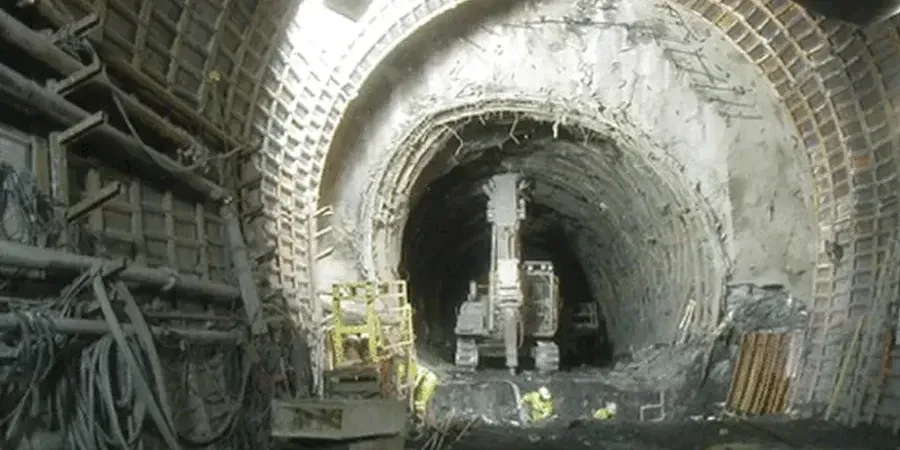
A string of inclinometer casing disappears into the borehole, its grooves aligned with the expected direction of movement. Above ground, the readout unit displays a real-time profile of subsurface deflection, capturing shifts as small as 0.01 inch. In Fresno, where deep excavations for underground parking and utility vaults cut through sequences of alluvial silts and stiff clays, this level of precision separates a controlled dig from a costly surprise. The San Joaquin Valley’s soil profile, shaped by millennia of Sierra Nevada runoff, often conceals sand lenses that complicate dewatering and shoring design. We combine automated total stations with vibration monitors to track wall movement and ground settlement, ensuring that every cut, brace, and tieback performs within the tolerances specified by the project’s earth retention system. For projects near existing structures, integrating deep excavation design with a solid instrumentation plan is standard practice.

Real-time inclinometer data and piezometer trends give the excavation team a continuous picture of ground behavior that no pre-construction model can predict alone.
Our service areas

Methodology and scope

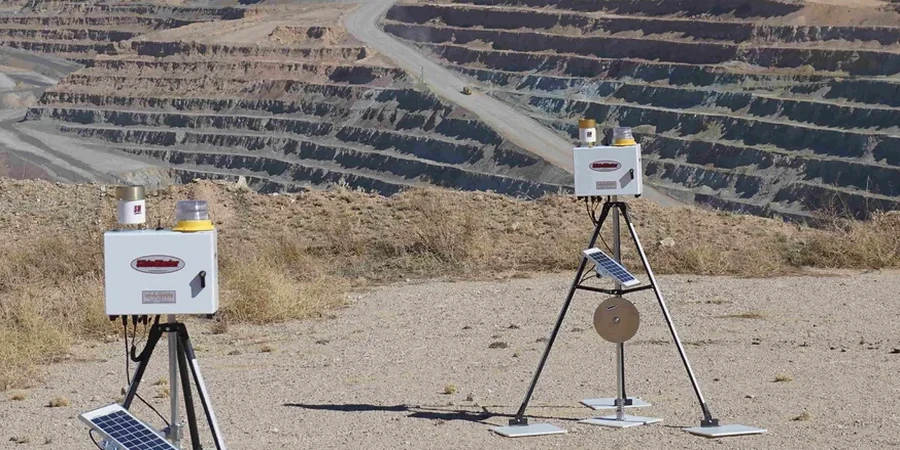
IBC Chapter 33 and OSHA Subpart P set the baseline for excavation safety, but Fresno’s subsurface demands a monitoring approach that goes beyond minimum compliance. The city sits on the eastern edge of the Central Valley’s alluvial fan, where groundwater can fluctuate dramatically between irrigation season and winter recharge—a condition that directly affects lateral earth pressures on shoring walls. Our monitoring arrays typically combine dual-axis in-place inclinometers with vibrating-wire piezometers, read hourly through dataloggers that push alerts if pore pressure rises beyond design assumptions. For excavations exceeding 20 feet in stiff, overconsolidated clays, the time-dependent relaxation of the cut face can produce progressive failure; we address this by pairing inclinometer data with slope stability analysis to recalibrate factors of safety during excavation. Settlement markers along the right-of-way are surveyed daily, and the resulting time-settlement curves provide early warning of ground loss that could impact adjacent utilities. When cohesionless lenses are encountered, readings from in-situ permeability tests refine the dewatering strategy and help prevent base heave.
Geotechnical Excavation Monitoring in Fresno: Instrumentation and Data for Safe Urban Digging
Technical reference — Fresno

Local considerations

Fresno’s hot, dry summers create a risk profile that differs sharply from coastal California. The upper 10 to 15 feet of soil can desiccate and crack during prolonged heat waves, increasing hydraulic conductivity and allowing construction water or summer thunderstorm runoff to infiltrate rapidly behind shoring. This scenario has triggered sudden piezometric spikes in otherwise stable cuts. Equally problematic, the city’s aging brick sewer lines and unreinforced masonry buildings—common in the Tower District and downtown—tolerate very little differential settlement. A 0.3-inch angular distortion across a masonry party wall can propagate cracking that escalates into a structural issue. Our monitoring plans in Fresno therefore specify tighter-than-standard alarm thresholds: 0.5 inches of total settlement at the right-of-way line and 0.25 inches of lateral wall movement at the excavation midpoint. Coordination with the contractor’s means-and-methods is immediate when a trend line approaches those limits, often triggering review of tieback anchor data or adjustments to the excavation sequence.

Need a geotechnical assessment?

Reply within 24h.

Email: contact@geotechnicalengineering1.com

Applicable standards

ASTM D6230-21 (Standard Practice for Monitoring Earth or Structural Movements Using Inclinometers), ASTM D7299-20 (Standard Practice for Verifying Performance of Vertical Inclinometer Probes), OSHA 29 CFR 1926 Subpart P (Excavations), ASCE/SEI 7-22 Chapter 35 (Excavation Monitoring and Observational Method)

Technical parameters

ParameterTypical value
Inclinometer accuracy (MEMS sensor)±0.01 in per 25 ft of casing
Vibrating-wire piezometer range0 to 50 psi (typical for shallow excavations)
Automated total station precision1 arc-second angular, 1 mm + 1 ppm distance
Crack gauge resolution0.01 mm (digital) / 0.5 mm (mechanical)
Vibration monitoring threshold0.5 in/s PPV (adjacent structures, per Caltrans)
Datalogger sampling interval5 to 60 minutes, configurable per sensor
Settlement marker accuracy±0.05 ft (optical level, closed loop)

Frequently asked questions

How much does a geotechnical excavation monitoring program in Fresno typically cost?

The cost depends on the number of instruments, monitoring duration, and reporting frequency. For a typical commercial excavation in Fresno, a 3-month program with four inclinometers, six piezometers, and settlement surveys generally falls between US$790 and US$2,590 per month, including data processing and weekly summary reports.

At what excavation depth does IBC require monitoring instrumentation?

IBC Section 3304 references the need for monitoring when excavations extend below the level of adjacent foundations. In practice, any cut deeper than 10 feet within a horizontal distance equal to the excavation depth from an existing structure typically triggers a monitoring requirement. The engineer of record determines the specific instrumentation based on the site’s geotechnical report.

What is the difference between an inclinometer and a tiltmeter?

An inclinometer measures lateral displacement along a vertical profile using a probe that traverses a grooved casing; it gives a continuous deflection curve from bottom to top. A tiltmeter, by contrast, is a fixed sensor that measures angular rotation at a single point. For shoring walls, inclinometers provide the full deformation shape, which is essential for identifying the depth of maximum bending moment.

How do you handle monitoring during Fresno's 100-plus-degree summer days?

Electronic instruments with extended temperature ranges are specified—MEMS inclinometers typically operate to 140°F without drift. Optical settlement surveys are scheduled for early morning to minimize refraction errors caused by heat shimmer over asphalt. Datalogger enclosures are ventilated, and battery life is derated for the higher ambient temperature.

Location and service area

We serve projects across Fresno and surrounding areas.

View larger map