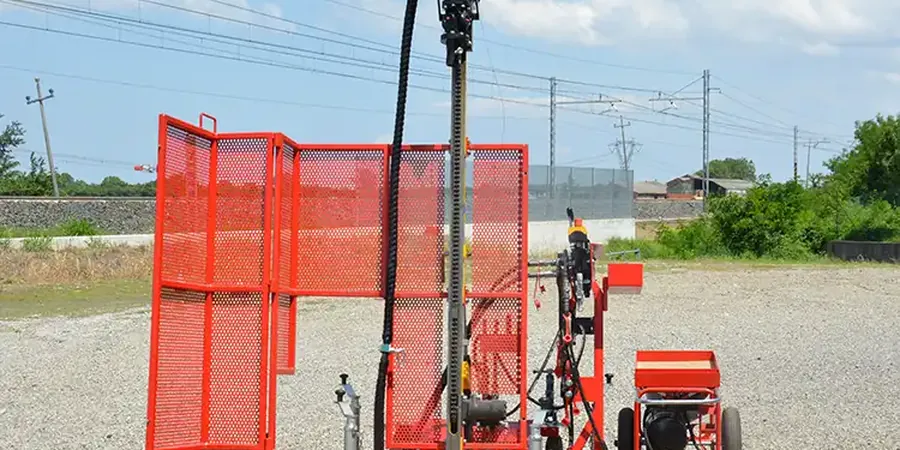
The CME-75 track rig rolls onto a Fresno site with 140-pound automatic safety hammer already warmed up from the drive across Highway 99 — that is the machine doing the real work behind every SPT borehole in this valley. Fresno sits on deep Quaternary alluvium washed down from the Sierra Nevada, and the standard penetration test remains the most direct way to measure how that deposit behaves under load. A split-spoon sampler is driven 18 inches into the soil in three 6-inch increments while the crew logs blow counts, recovery, and any change in material. Those numbers feed directly into bearing capacity equations, settlement estimates, and liquefaction screening per Youd-Idriss. For projects near the San Joaquin River or out toward Clovis where groundwater can be shallow, the SPT also provides disturbed samples for lab classification under ASTM D2487. When the stratigraphy suggests coarser lenses at depth, we sometimes pair the SPT program with a CPT sounding to get continuous tip resistance in the sandy intervals, or combine it with grain-size analysis to confirm the Unified Soil Classification on every split-spoon sample retrieved.
In Fresno's alluvial basin, SPT N-values drive everything from shallow footing design to liquefaction screening — a single borehole can define the entire foundation strategy.